
Clean scented candles have quickly become a top priority for households that want beautiful fragrance without compromising indoor air quality. As more people pay close attention to the ingredients in the products they bring into their living spaces, the demand for transparent and thoughtfully made candles continues to grow across the country.
At Lily V Candles and Soaps, we pour every batch by hand in Cincinnati using 100 percent renewable soy wax and carefully selected fragrance oils. We understand what goes into a truly cleaner candle because we craft each one from start to finish, and we want to share that information so you can make confident choices for your home.
Why the Wax Base Is the Foundation of a Cleaner Burn
The single most important factor in any candle is the wax itself. The wax determines how the candle melts, how much soot it releases, and what kind of compounds enter the air around you. When we talk about clean natural candles, the conversation always starts with the wax base because it sets the tone for everything else.
Paraffin wax is a petroleum byproduct that has dominated the candle industry for decades because it is inexpensive and holds fragrance well. However, research has shown that burning paraffin can release volatile organic compounds such as benzene and toluene into indoor air. These are the same chemicals associated with poor air quality in enclosed spaces, and they are exactly what most people are trying to avoid.
Soy wax is extracted from soybean oil and is fully renewable. It burns at a lower temperature, which means a slower and more even melt pool. This slower burn translates to less soot and fewer airborne particulates floating through your home. Coconut wax and beeswax are also excellent plant-based alternatives that combust cleanly into water vapor and carbon dioxide.
When you choose clean scented candles made from soy or other plant-based waxes, you are making a meaningful shift away from petroleum-derived products. The difference is noticeable the very first time you light one. The flame stays steady, the wax melts evenly, and the air around you stays remarkably clear.
For anyone exploring the full range of hand-poured soy options, the candle collection at Lily Vs Candles and Soaps offers a variety of sizes and scents crafted with this exact philosophy in mind.
The Wick Plays a Bigger Role Than Most People Realize
A candle is a complete system, and the wick is the engine that drives the entire burn. Even the purest soy wax will perform poorly if paired with the wrong wick. This is why clean-burning scented candles require careful attention to wick material, thickness, and construction.
The safest options are 100 percent braided cotton wicks and untreated wood wicks. Cotton wicks provide a consistent and even flame without introducing heavy metals into your home. Wood wicks offer a gentle crackling sound and a wide flame that helps the wax pool evenly across the entire surface of the candle.
Wicks with metal cores, particularly those containing zinc or lead, can release toxic heavy metal particles when burned. While lead core wicks have been banned in the United States since 2003, some imported candles may still contain them. We always recommend checking the wick composition before purchasing any candle, especially if you plan to burn it frequently in a bedroom or small living area.
A well-matched wick and wax combination produces a flame that stays steady without flickering excessively or producing visible black smoke. This balance is something we test extensively with every batch we pour to ensure clean scented candles that perform as beautifully as they smell. The dough bowl candles from Lily V Candles and Soaps are a perfect example of how the right wick pairing creates a clean, even, and beautifully fragrant burn in a unique wooden vessel.
Fragrance Transparency and Why It Truly Matters
The fragrance component of a candle is where things can get murky. Many conventional candles list “fragrance” as a single ingredient without disclosing what that fragrance actually contains. This vague labeling can hide phthalates, synthetic dyes, and other chemical additives that contribute to indoor air pollution and respiratory irritation.
Clean fragrance candles use either pure essential oils or clearly disclosed phthalate-free fragrance blends. Essential oils are extracted from plants directly and offer a natural aromatic profile that feels authentic and grounded. Phthalate-free fragrance oils are synthetically created but formulated without the harmful plasticizing chemicals that have raised serious health concerns in recent years.
According to the EPA, certain organic pollutants are often found at concentrations 2 to 5 times higher indoors than outdoors, while activities such as burning candles can contribute to indoor particulate matter. This statistic underscores why choosing transparently scented products is not just a lifestyle preference but a genuine health consideration for you and your family.
When shopping for natural scented candles, look for brands that openly list their fragrance sources and confirm the absence of phthalates, parabens, and artificial dyes. A truly clean candle will never hide behind vague ingredient lists. We believe transparency is non-negotiable, which is why every fragrance we use is carefully vetted before it ever touches our wax.
How to Evaluate a Candle Before You Light It
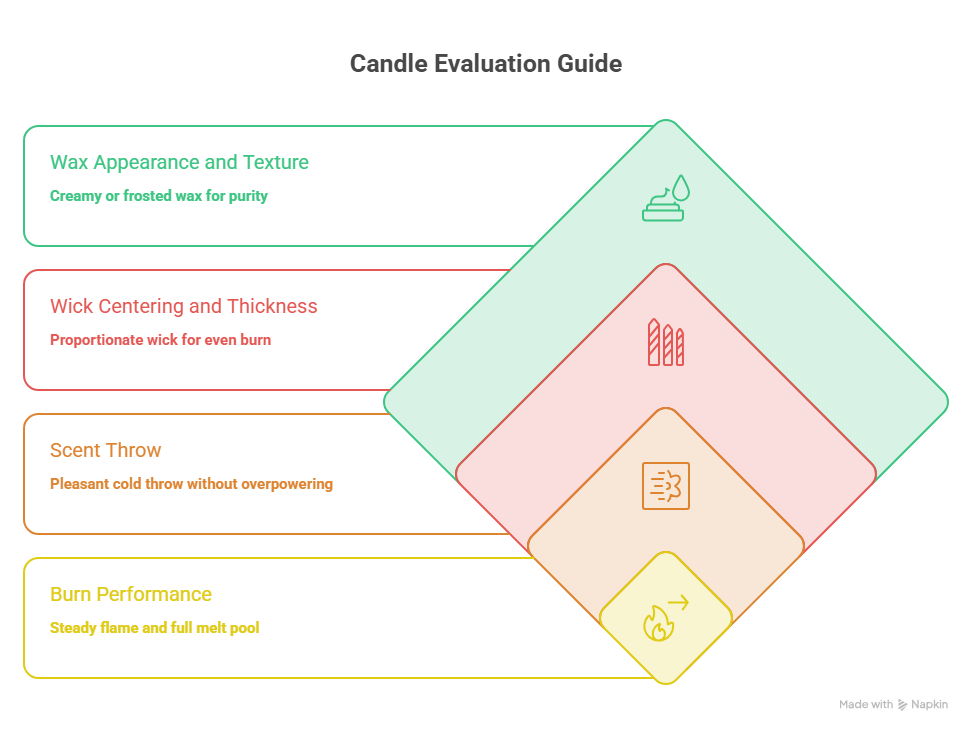
Knowing what to look for can save you from wasting money on candles that look clean on the label but perform poorly in practice. Here are the key indicators of a genuinely well-made candle.
Wax Appearance and Texture
Clean natural candles made from soy wax often have a slightly creamy or frosted appearance. This is completely normal and actually signals that the wax is pure and free from synthetic smoothing additives. A perfectly smooth and glossy surface may indicate the presence of paraffin blends or chemical agents.
Wick Centering and Thickness
The wick should be perfectly centered and proportionate to the diameter of the candle. A wick that is too thick will produce a large and smoky flame. A wick that is too thin will tunnel and waste wax along the edges of the container.
Scent Throw before Lighting
A high-quality candle should have a pleasant but not overpowering cold throw. If the scent is so strong that it fills the room before you even light the wick, the fragrance load may be excessively high, which can lead to soot and uneven burning once the flame is introduced.
Burn Performance
Once lit, clean-burning scented candles should develop a full melt pool within the first few hours. The flame should remain steady without excessive flickering, and there should be no visible black soot on the jar or surrounding surfaces.
The 20-ounce pillar candle is a wonderful example of a candle that delivers a long and even burn thanks to its carefully tested wick and wax pairing.
Simple Ways to Transition to Cleaner Candles at Home
Switching to cleaner candles does not have to happen overnight. You can start by replacing the candles you burn most frequently, such as the ones in your bedroom or living room, with plant-based alternatives that prioritize clean fragrance candles over synthetic options.
Pay attention to how the new candles perform compared to your old ones. You will likely notice less soot buildup on walls and furniture, a more balanced scent that does not cause headaches, and a longer overall burn time per ounce of wax. These small but meaningful changes add up quickly over time.
We also recommend trimming your wick to about a quarter inch before every burn and avoiding burning any candle for more than three to four hours at a time. These simple habits make a big difference in how cleanly and efficiently your natural scented candles perform throughout their lifespan.
If you are looking for a unique and cozy option to start your clean candle journey, the coffee candle from Lily Vs Candles and Soaps brings a warm and inviting aroma to any room while maintaining the clean burn standards you deserve.
Frequently Asked Questions
What is the three-hour rule for candles?
The three-hour rule suggests that you should burn a container candle long enough for the melted wax pool to reach the vessel edges, which typically takes about three hours. At the same time, you should avoid exceeding three to four hours of continuous burning to prevent the container from overheating and the wick from mushrooming.
How can you tell if a candle is high quality?
A high-quality candle features natural wax such as soy or beeswax, a centered cotton or wood wick, a balanced scent that is noticeable but not overwhelming, and a clean burn that avoids tunneling, excessive smoke, or soot buildup on the container.
When should you stop using a candle?
You should stop burning a jar candle when approximately half an inch of wax remains at the bottom. Continuing to burn a candle past this point can cause the glass container to overheat and potentially crack or shatter.
Are soy candles better for improving indoor air quality?
Yes, soy candles generally produce less soot and fewer airborne pollutants compared to paraffin candles. Because soy wax is plant-based and burns at a lower temperature, it releases fewer volatile organic compounds into the air, making it a cleaner option for enclosed living spaces.
Do clean scented candles produce less soot?
Clean scented candles made with natural waxes, cotton or wood wicks, and phthalate-free fragrances produce significantly less soot than conventional paraffin candles. The combination of pure ingredients and proper wick sizing ensures a steady flame that minimizes black residue on walls, ceilings, and furniture.
A Breath of Fresh Air Starts with What You Burn
Choosing clean scented candles is one of the most impactful ways to improve the atmosphere in your home. From the wax base to the wick material to the fragrance transparency, every detail contributes to a candle that smells wonderful and respects the air you breathe every single day.
We invite you to explore the full range of hand-poured and small-batch options at Lily Vs Candles and Soaps and experience the difference that clean, conscious craftsmanship can make in your daily routine.

